

Last Updated: October 28, 2026
Quick Summary
Style a cottagecore living room by clearing the room first, then setting the anchor pieces and layout, and only then layering texture, florals, and warm light. Build the look on natural materials, vintage pieces, and a soft palette of cream, oat, sage, and clay so it feels gathered over time rather than staged.
- Clear out furniture you do not love before placing any anchor pieces.
- Keep 45 to 60 cm of walkway around main seating for an easy flow.
- Use a color ratio of about 60% soft base, 30% earthy mid-tones, and 10% deep accent.
- Mix at least three materials, such as wood, wicker, and linen, in every seating zone.
- Pick one hero pattern per zone and keep the rest of the room solid.
Table of Contents
- Start With a Styling Sequence, Not a Shopping Spree
- Step 1: Clear and Assess the Room
- Step 2: Set the Anchor Pieces and Layout
- Step 3: Layer Texture, Florals, and Light
- Cottagecore Living Room Ideas That Work in Real Rooms
- Building a Cottagecore Color Palette of Soft Colors and Earthy Tones
- Natural Materials and Vintage Furniture That Carry the Look
- Styling a Cottagecore Living Room on a Budget
- Cottagecore Decorating Mistakes That Make a Room Feel Off
- Small Rooms, Rentals, and Modern Function
- Shop the Pieces That Anchor Your Cottagecore Living Room
- Frequently Asked Questions
Start With a Styling Sequence, Not a Shopping Spree
Most people begin with a cart full of floral pillows and regret it by week two.
Below, we walk through the full sequence and the budget, color, and small-space fixes that come with it.
A cottagecore living room is a soft, lived-in space built on natural materials, vintage pieces, warm light, and floral or botanical pattern.
That "gathered, not staged" idea is the whole game. Get it right and even a small apartment reads as cozy.
Step 1: Clear and Assess the Room
Pull everything out that you do not love. Yes, everything.
A common mistake is styling around furniture you have already fallen out of love with. Box it, move it, or sell it. Then look at the bare room and answer three questions:
- Where does daylight land, and when?
- Which wall is the natural focal point?
- What is the traffic path through the room?
Those answers decide your layout later. Skipping this step is why so many cottagecore living room ideas fail in practice.
Step 2: Set the Anchor Pieces and Layout
Place the big pieces first: sofa, largest chair, main table, and a rug that ties them together. Aim for conversation distance, not a waiting-room spread.
Try these layout rules:
- Float the sofa off the wall when the room allows it
- Keep 45 to 60 cm of walkway around main seating
- Angle a chair toward the sofa, not parallel to it
If a piece does not serve the layout, it goes. This is where most rooms get cluttered, and where a little discipline pays off.
Step 3: Layer Texture, Florals, and Light
Now add the soft layer: textiles, pattern, plants, and lighting. This is the part that creates the storybook feel.
Work in this order:
- Drape a throw over one arm of the sofa
- Add two or three pillows in mixed fabrics
- Tuck a small floral bundle into a vase or tray
Watch out: layering too many florals at once makes a room feel busy rather than cozy. Pick one floral moment per zone and let the rest stay quiet.
Cottagecore Living Room Ideas That Work in Real Rooms
Real rooms need real solutions, not mood boards. These cottagecore living room ideas hold up in daily life:
- The reading corner: one armchair, a side table, a lamp, and a basket of throws
- The shelf story: books, a woven box, and a small vase of stems
- The layered sofa: a linen throw, two textured pillows, and one patterned accent
For more styling directions that pair well with this look, browse our guide to 7 cozy home decor trends for 2026 that feel timeless.
Building a Cottagecore Color Palette of Soft Colors and Earthy Tones
A cottagecore color palette starts with a soft base and adds earthy depth. Think cream, oat, sage, clay, and faded blue, then one deeper tone for contrast.
Here is a simple ratio that works:
| Layer | Share of Room | Examples |
|---|---|---|
| Soft base | About 60% | Cream, oat, warm white walls |
| Earthy mid-tones | About 30% | Sage, clay, mushroom, faded denim |
| Deep accent | About 10% | Walnut, charcoal, deep green |
Keep saturated colors to small accents. A bright cushion is charming; a bright sofa is a commitment. Warm, soft colors age better and photograph beautifully in natural light.
Natural Materials and Vintage Furniture That Carry the Look
Texture is what separates cottagecore from plain farmhouse style. Wood, wicker, linen, and aged metal do the heavy lifting.
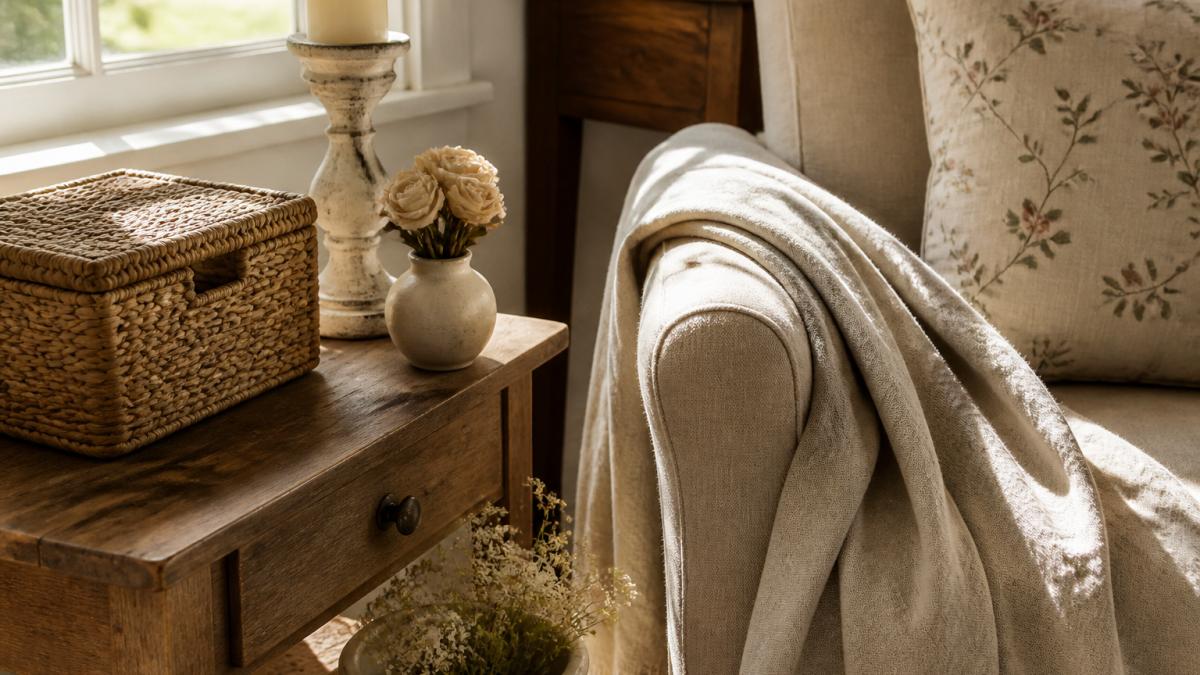
Mix at least three materials in every seating zone. Wood brings warmth, wicker adds weave and shadow, and linen softens everything it touches.
Vintage furniture does not need to match. In fact, mismatched pieces read as more authentic. A weathered side table beside a clean-lined sofa looks collected, not careless.
For vintage-style anchor furniture, our pedestal farmhouse end table set of 2 pairs a distressed white top with a tripod base, which suits both cottagecore and boho rooms.
Styling a Cottagecore Living Room on a Budget
You do not need a big spend to get this look. A cottagecore living room on a budget comes down to sourcing, patience, and knowing which categories to thrift versus which to buy new.
A simple three-tier budget plan
Think in tiers rather than one lump sum.
- Lean tier (mostly thrift and DIY): Prioritize one strong secondhand anchor, a wood side table, a wicker chair, or a small bookcase, then fill in with fabric, plants, and lighting. Spend where texture shows: a linen-look throw, two pillow covers, and a warm bulb do more than a new sofa.
- Mid tier (mix old and new): Buy the sofa or largest chair new for comfort and durability, then source the side tables, lamps, and decor secondhand. This is the sweet spot for most homes because the big-ticket item carries daily wear while the vintage layer carries the style.
- Comfort tier (invest in anchors): Put money into the pieces you touch every day, seating, rug, and lighting, and keep the cottagecore signal in the accessories. A well-made neutral sofa with thrifted tables and layered textiles will outlast a trendy floral set.
What to thrift, what to DIY, what to buy new
- Thrift first: wood side tables, wicker and rattan chairs, picture frames, vases, brass or aged-metal candle holders, baskets, and books. These carry the timeworn charm and are easy to find secondhand.
- DIY or repurpose: repaint a chipped chair, re-cover a lampshade, sew or no-sew pillow covers from vintage fabric, and group small finds into one vignette so they read as a collection rather than clutter.
- Buy new: upholstered seating (for comfort and cleanability), rugs (for size and durability), and lighting (for safety and warm color temperature). These are the pieces where cheap shortcuts show fastest.
Sourcing moves that stretch the budget
- Shop secondhand first for wood and wicker, and check estate sales and local marketplaces for the aged pieces the look needs.
- Use fabric, not furniture, to change the mood, pillow covers and throws cost far less than a new chair.
- Group small finds into one strong vignette instead of scattering them, so a few inexpensive pieces read as intentional.
Small accents carry a lot of weight here. Our cream mini rose bundle is a pre-bundled set of faux stems that can sit in a small vase or be separated across shelves, so one purchase styles several spots.

Cottagecore Decorating Mistakes That Make a Room Feel Off
Even good rooms can feel slightly wrong. These cottagecore decorating mistakes are the usual suspects:
- Too many patterns at once. Pick one hero pattern and keep the rest solid.
- Cool white bulbs. They kill the warmth instantly.
- All-new everything. The look needs at least one aged piece.
The fix for most of these is subtraction, not shopping. Remove one thing from each surface and the room usually improves.
Small Rooms, Rentals, and Modern Function
Small spaces can carry this look. The trick is vertical styling, multi-use pieces, and reversible choices, then layering in storage.
Layout rules for small living rooms
- Float or tuck, don't crowd. In a small room, pull the sofa slightly off the wall only if you still keep a clear path; otherwise tuck it to the wall and angle one chair toward it to create conversation.
- Choose a loveseat over a full sofa when floor space is tight, and add a slim console or wall shelf for surface area.
- Keep 45 to 60 cm of walkway around main seating so the room does not feel blocked.
Rental-friendly, reversible solutions
- Removable wallpaper for a floral or botanical moment without a permanent commitment.
- Freestanding shelves and leaning mirrors instead of wall-mounted pieces, nothing needs a drill.
- Layered rugs over existing flooring to add warmth and pattern without installation.
Balancing cottagecore with modern function
A cottagecore room still needs to work. Plan for these everyday realities:
- Storage that hides clutter: choose woven or wood boxes that double as decor, and use closed storage for everyday items so surfaces stay calm.
- Durable fabrics: for child- or pet-friendly homes, favor washable slipcovers, tightly woven linen blends, and performance fabrics in the soft, earthy palette rather than delicate florals on high-traffic seating.
- Lighting for tasks and mood: layer three sources, an overhead, a table lamp for reading, and a candle or two, and keep bulbs warm (around 2700K) so the room feels like a retreat.
Our woven lidded storage box comes in four sizes and stacks neatly, which keeps the woven texture while hiding everyday items. For lighting, our whitewash candle holder set fits candles up to 2.5 inches and adds a natural wood accent to a shelf or side table. Warm, low light is what makes the room feel like a retreat.
Shop the Pieces That Anchor Your Cottagecore Living Room
Start with the anchors, then layer slowly. That order saves money and keeps the room calm.
If you want a shortcut, browse our list of the best cottagecore home decor brands to shop in 2026 for trusted places to source pieces that fit the look. Our own collection leans on solid wood craftsmanship and soft, ambient lighting.
Frequently Asked Questions
What colors work best in a cottagecore living room?
Warm, soft colors and earthy tones do most of the work: cream, ivory, oat, sage, dusty rose, and faded terracotta. Build the base in neutrals, then add one or two muted accent colors through textiles and florals. Avoid stark white walls next to cool grey furniture, since that contrast kills the warmth. A cottagecore color palette should feel like it came from a garden and a linen cupboard, not a paint chip display.
How can I make a small living room feel cottagecore without clutter?
Choose fewer, larger pieces instead of many small ones. A single soft sofa, one wooden side table, and one woven storage box with a lid will do more than a scatter of tiny ornaments. Use vertical space for plants and wall decor, keep the floor as clear as possible, and pick storage that doubles as decor, like a seagrass box for household essentials. Layering texture in a small cottagecore living room works best when the palette stays tight.
What are common cottagecore decorating mistakes to avoid?
The biggest cottagecore decorating mistakes are treating the style as a shopping list rather than a mood and mixing too many patterns at full strength. Another is ignoring lighting. Use warm, low ambient light from candles, lamps, and sconces. Finally, don't copy a styled photo exactly. Keep pieces that tell your own story so the room doesn't read as a set.
How do you mix vintage and modern pieces in cottagecore decor?
Anchor the room with one or two character pieces, such as a weathered wooden table or an antique armchair, then keep the rest simple and modern so the vintage pieces stand out. Repeat materials, like wood and linen, across old and new items to tie them together. Keep the color palette consistent and let scale vary. Mismatched furniture reads as collected over time when the tones and textures echo each other.
Building a cottagecore living room takes patience, but the payoff is a space that actually feels like a retreat. Charmed Cottage Living curates solid wood pieces, woven storage, and warm lighting accents designed to layer into that calm, collected look. Start with one anchor piece and one soft layer, then add slowly. Explore the Charmed Cottage Living collection and build a living room that feels warm, welcoming, and entirely yours.
