

Last Updated: October 23, 2026
Quick Summary
To mix vintage and modern, start with a neutral backdrop of white, beige, or soft gray walls so each piece stands on its own, then connect old and new furniture through a shared color, material, or shape. Contrast with a thread of connection keeps the room from feeling busy.
- Pair a heavy carved antique with something light and open to keep the eye moving.
- Use the 3-5-7 rule to group accessories in odd numbers for visual balance.
- In the living room, keep the sofa modern and neutral, then add exactly one vintage focal point.
- Limit vintage pieces in the bedroom to two or three so the room stays restful.
- Buy modern anchors new and hunt for vintage accents secondhand to keep costs down.
Table of Contents
- Start With a Neutral Backdrop Before You Mix Vintage and Modern
- Mixing Vintage and Modern Furniture Without the Clash
- The 3-5-7 Rule in Decorating: A Simple Ratio for Mixing Eras
- Vintage and Modern Decor Ideas for Every Room
- How to Mix Rustic and Modern Without Losing the Cozy Feel
- Sourcing, Budgeting, and Caring for Mixed-Era Pieces
- Conclusion
- Frequently Asked Questions
Start With a Neutral Backdrop Before You Mix Vintage and Modern
The fastest way to make old and new pieces feel like they belong together is to give them a calm, quiet background. Neutral walls in white, beige, or soft gray act as a stage, letting each piece stand on its own without competing for attention.
Here is why it works:
- A neutral backdrop stops eras from clashing
- It lets wood tones and textures read clearly
- It makes a single statement piece feel intentional
Start with the walls and floors, then layer in your furniture. If you want to learn how to mix vintage and modern without the room feeling busy, this is the step most people skip. Don't skip it.
Mixing Vintage and Modern Furniture Without the Clash
Mixing vintage and modern furniture works when the pieces share something, whether that's color, material, or shape, even if they come from different decades. The trick is contrast with a thread of connection.
Think of it as a conversation. Every piece should have something to say to its neighbor. That might be a matching wood tone, a repeated curve, or a shared metal finish.
Balance Shapes, Silhouettes, and Wood Tones
Shapes do most of the talking in a mixed room. Pair a heavy, carved antique with something light and open, or a curvy vintage sofa with a clean-lined modern table.
Wood tones need a referee. You have two options:
- Match closely: keep wood tones within a similar family so the room feels calm
- Repeat deliberately: use the same wood tone at least twice so it reads as a choice, not an accident
What most guides miss is that a single odd wood tone is the most common reason a mixed room feels off. Add one more piece in that tone and the "mistake" becomes a pattern.
The 3-5-7 Rule in Decorating: A Simple Ratio for Mixing Eras
The 3-5-7 rule in decorating is a styling guideline that groups accessories in odd numbers (three, five, or seven items) to create visual balance. Odd numbers feel more natural to the eye than even ones, and the varied heights within a group keep a shelf or table from looking stiff. When you are mixing eras, the rule does double duty: it controls how many objects compete for attention and it forces you to decide which era leads in each group.
Here is how to use it when you mix eras:
| Group Size | Best For | Era Mix That Works | Why It Works |
|---|---|---|---|
| 3 items | Small surfaces, side tables, nightstands | One vintage vase, one modern candle holder, one book stack | The single vintage piece reads as a deliberate accent, not a stray |
| 5 items | Mantels, console tables, open shelves | Two old pieces, two new pieces, one bridging object (a plant, a mirror, a tray) | The bridging object gives the eye a neutral resting point between eras |
| 7 items | Large shelving, dining tables, buffet tops | A layered mix of heights, textures, and eras with one repeated material | Repetition keeps seven objects from reading as clutter |
The rule is not about hitting a number. It's about variety and hierarchy. A group of three identical modern vases reads as flat. A group of three where one is antique, one is contemporary, and one is a plant reads as collected. The same logic scales: a group of five should have one clear tallest object, one clear widest object, and the rest filling the middle.

How to Assign Eras Within a Group
A practical pattern most stylists use is the "one anchor, two supporters" structure. Pick the piece you want the eye to land on first, decide its era, then make sure the other objects in the group either echo it or contrast with it on purpose. If the anchor is a vintage brass candlestick, a modern ceramic vase and a stack of old books give you a vintage-led group.
Scale the Group to the Surface
The 3-5-7 rule fails when it is applied without measuring. A common pattern is that a group should occupy roughly two-thirds of the surface it sits on, leaving breathing room on either side. On a narrow console, that usually means three objects, not five. On a long dining table, seven small objects can look scattered while three larger ones look intentional. Before you commit to a number, place the objects on the surface, step back, and check whether the group reads as one composition or as separate items.
Vintage and Modern Decor Ideas for Every Room
Vintage and modern decor ideas work best when each room gets its own balance. A living room can handle bolder contrast, while a bedroom usually wants softer blending. Most guides stop at that sentence. What they miss is the layout: which piece anchors the room, how big it should be relative to the space, and where the vintage piece goes so it reads as intentional.
Living Room: One Modern Anchor, One Vintage Focal Point
Start with the largest piece, usually the sofa, and keep it modern and neutral. A common pattern is a sofa that occupies roughly two-thirds of the wall it faces, leaving room for a side table or floor lamp on each end. Then add exactly one vintage focal point: an antique side table, a distressed wood coffee table, or a single carved chair.
Bedroom: Keep the Big Pieces Quiet
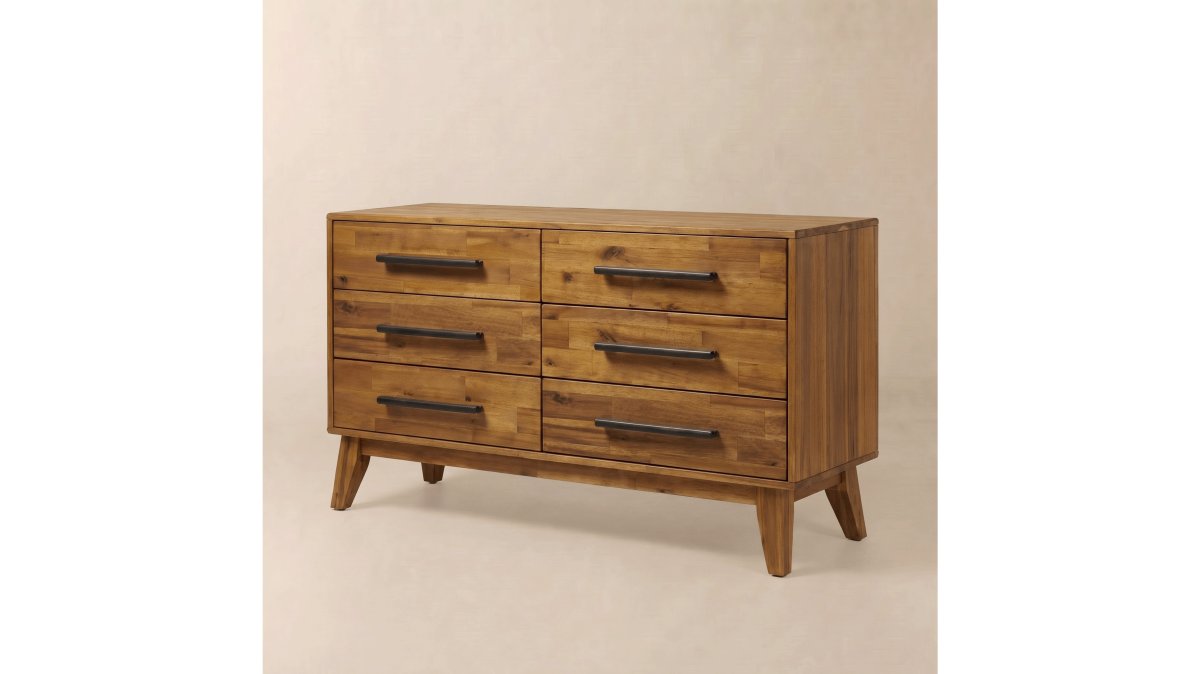
In a bedroom, the bed and dresser do most of the visual work, so keep them modern and quiet, then bring in vintage texture through bedding, a wooden dresser, or a single antique lamp. The Legacy Solid Wood Dresser is a good example of a piece that bridges both worlds: natural acacia tones read as heritage, but the clean silhouette keeps it current.
Alessia Metal Pillar Candle Holder Set →

Dining Room: Mix the Set, Not Just the Decor
The dining room is where mixing eras is most visible, because chairs sit in a row and any mismatch shows. The reliable pattern is a modern table with vintage chairs, or the reverse, and then repeat one material across both, such as black metal legs on the table and black metal frames on the chairs. For scale, allow about 24 inches of table width per person and leave at least 36 inches between the table edge and the nearest wall or furniture so chairs can pull out.
Entryway: A Small, Confident Mix
The entryway is the place for a small, confident mix. A vintage console with a modern candle holder set gives guests an immediate sense of your style. Keep the console shallow (12 to 15 inches deep) so the walkway stays clear, and hang a mirror or art above it to add height. Because entryways are high-traffic, check that any vintage piece is stable and that drawers and doors open without hitting the wall.
Small Spaces: Fewer Pieces, Stronger Contrast
In a small room, the temptation is to use only small pieces, which makes the space feel busier. A better pattern is one large modern anchor, one vintage piece with a clean silhouette, and very little else.
How to Mix Rustic and Modern Without Losing the Cozy Feel
To mix rustic and modern, keep the rustic elements warm and textured while letting modern pieces provide clean lines and breathing room.
Rustic pieces bring the warmth: raw wood, woven baskets, aged metal, chunky knits. Modern pieces bring the calm: smooth surfaces, simple shapes, uncluttered space.
A few practical moves:
- Use warm, low lighting to soften hard modern lines
- Keep at least one bare, uncluttered surface in every room
- Repeat natural materials like wood and linen to connect the two styles
The thing nobody tells you about rustic-modern rooms is that lighting does half the work.
Sourcing, Budgeting, and Caring for Mixed-Era Pieces
Sourcing mixed-era pieces is easier when you buy the modern anchors new and hunt for the vintage accents secondhand. This keeps costs down and gives you control over quality where it matters most.
Budgeting approach:
- Spend more on the pieces you touch daily (sofa, coffee table, dresser)
- Save on accessories, which you can swap as your taste evolves
- Buy vintage pieces in person when you can, so you can check joints and finishes
Sourcing tips:

- Check estate sales and local markets for solid wood pieces
- Look for dovetail joints and real wood, not veneer over particle board
- Ask about provenance, but buy for condition first
Care and safety:
- Re-stain or refinish wood pieces in a well-ventilated space
- Test any finish on a hidden spot first
- Keep candles on stable, heat-safe holders away from fabric (Candle safety)
Conclusion
Building a room that mixes eras well takes patience and a willingness to edit as you go. The challenge is knowing which pieces to keep and which to let go, and that's where having a clear point of view helps most.
At Charmed Cottage Living, we curate pieces that make this easier: solid wood craftsmanship that grounds a room, ambient lighting that softens contrast, and accent pieces that bridge old and new.
Frequently Asked Questions
Can you mix rustic and modern furniture in the same room?
Yes, and the result can feel more personal than sticking to one style. The trick is to anchor the room with a neutral palette and repeat at least one material or finish across both rustic and modern pieces. For example, pair a distressed pine coffee table with a clean-lined modern sofa, then echo the wood tone in a candle holder or shelf. Keep the rustic pieces warm and textural, and let the modern pieces provide breathing room so the space does not feel cluttered.
What is the 3-5-7 rule in decorating?
The 3-5-7 rule is a styling guideline for grouping objects in odd numbers to create visual balance. You arrange accessories in clusters of three, five, or seven, varying heights and textures within each group. A trio of ribbed wooden candle holders in graduated sizes is a simple example. The odd number keeps the eye moving and feels more natural than symmetrical pairs. Apply it to mantels, shelves, and console tables when mixing vintage and modern decor so the arrangement looks intentional rather than scattered.
How many vintage pieces should you use in a room?
A common starting point is the 80/20 ratio, where roughly 80 percent of the room is a consistent base and 20 percent is contrast. If you want vintage to be the accent, keep vintage pieces to about one in five. If vintage is the star, flip the ratio. The right number depends on the room size and your tolerance for visual contrast. Start with one statement vintage piece, live with it for a week, then add a second only if the room still feels balanced.
How do you keep vintage and modern decor from clashing?
Clashing usually comes from competing colors, too many wood tones, or pieces of similar visual weight fighting for attention. Fix it by choosing a unified color palette first, limiting yourself to two or three wood tones, and giving each piece space. Repeat one material, such as black metal or natural wood, across both eras to create a thread. A neutral backdrop of white, beige, or gray walls lets the contrast read as deliberate. Proportion matters too: a large modern sofa paired with a small antique side table will feel off, so match scale before style.
Ready to bring warmth and character into your space? Explore our curated collection at Charmed Cottage Living and find the pieces that make your mix feel like home.
